
Gelcoat Restoration: Can You Apply New Over Old?
Yes, you can apply new gelcoat over old gelcoat — but only if the existing surface is structurally sound, properly prepared, and free of wax, oil, and loose material. A professional re-gelcoat job typically runs between $300 and $600 per linear foot of hull, depending on condition and complexity. Understanding what the process actually involves helps you set realistic expectations before your boat goes into restoration. Learn more about Boat Restoration.
What It Means to Re-Gelcoat a Boat
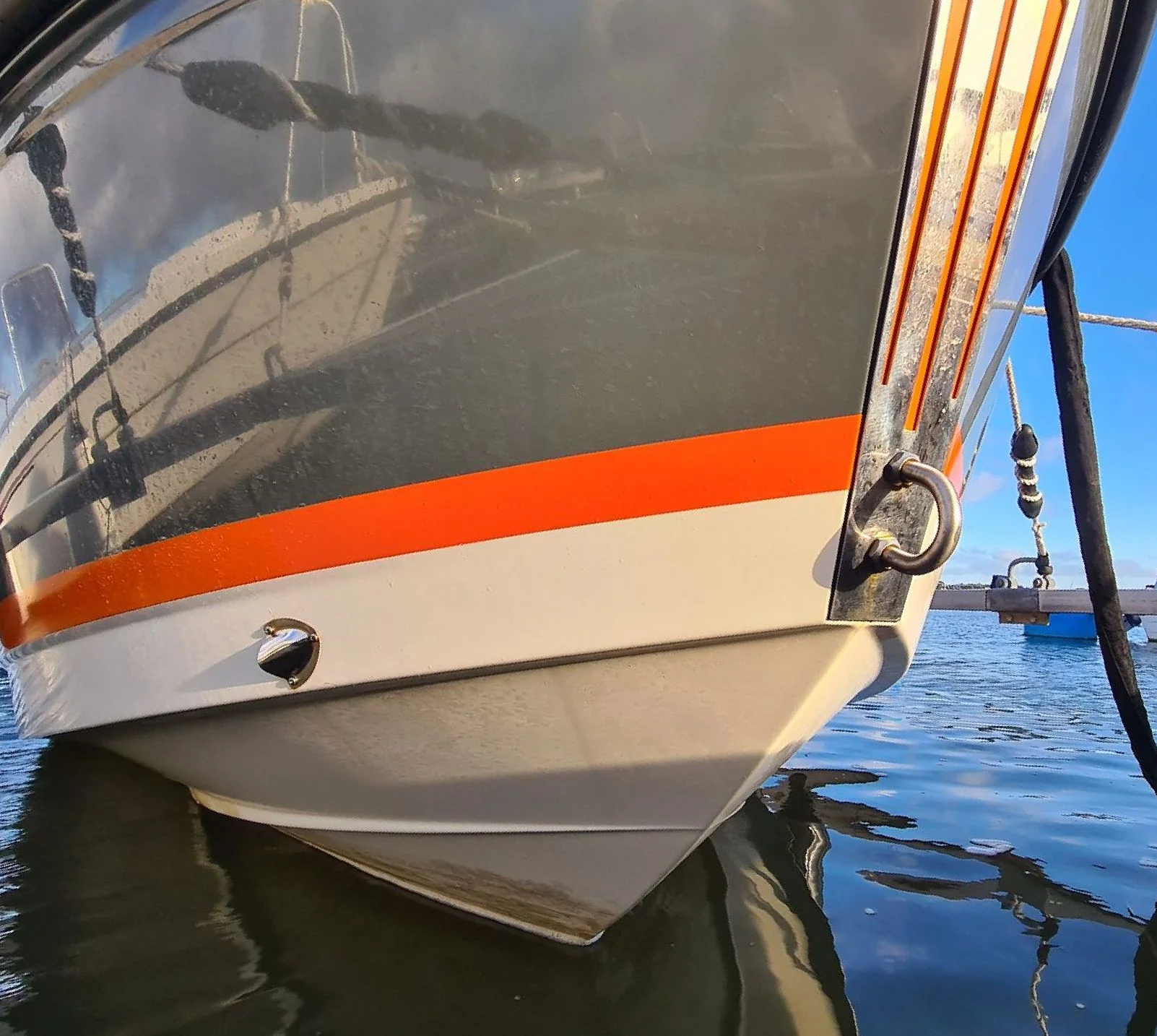
Gelcoat is the outermost layer of a fiberglass hull — it provides color, gloss, and UV protection. Over time it fades, crazes, or becomes porous, and no amount of polishing will bring it back to factory condition. Re-gelcoating means spraying or rolling a fresh layer of pigmented polyester resin over the prepared surface, then sanding and buffing it to a high gloss. Done correctly, a re-gelcoat job can make a tired hull look better than it did when it left the factory.
Can You Gelcoat Over Old Gelcoat?
The short answer is yes, with conditions. New gelcoat bonds chemically and mechanically to old gelcoat, but only when the old surface is in acceptable shape. If the existing gelcoat is deeply cracked, delaminating, or saturated with moisture, those problems must be repaired first — otherwise the new layer will fail in the same spots. A thorough inspection by a marine mechanic before any product is mixed is not optional; it is the step that determines whether re-gelcoating is even the right call.
Preparation is where most DIY attempts fall short. The surface must be sanded to at least 80-grit to give the new gelcoat mechanical tooth, then cleaned with acetone to remove every trace of wax and contamination. Skipping or rushing prep is the single most common reason a fresh gelcoat job peels, bubbles, or loses adhesion within a season.
- Old gelcoat must be structurally intact — no delamination or active moisture intrusion
- All cracks and chips are repaired and faired before the new layer goes on
- Surface is sanded, cleaned with acetone, and allowed to fully dry
- Color matching requires a spectrophotometer or factory color code — eyeballing it rarely works
- Sprayed gelcoat produces a smoother finish than rolled-and-tipped application
What Affects the Cost of a Professional Re-Gelcoat Job
Several factors push the price up or down — knowing them helps you understand a quote before you sign anything.
Hull Size:
Larger boats require more material and more labor hours. Pricing per linear foot is common, so a 30-foot boat costs roughly twice what a 15-foot boat does.
Surface Condition:
Heavy oxidation, spider cracks, or osmotic blisters all require additional prep and repair work before gelcoat can be applied, adding to the total.
Color Complexity:
Single-color hulls are straightforward. Multi-color designs, graphics, or custom tints require masking, multiple spray sessions, and more precise color matching.
Application Method:
Sprayed gelcoat costs more in labor but produces a finer finish. Rolled application is faster and less expensive but typically requires more finish sanding.
Finish Level:
A basic re-gelcoat with a workable gloss costs less than a show-quality finish that involves multiple stages of wet-sanding and machine polishing.
Access and Location:
Boats that can be worked on at a yard or marina are easier to price. Remote or difficult-access locations may add a travel or setup fee.
How Far Does a Gallon of Gelcoat Go?
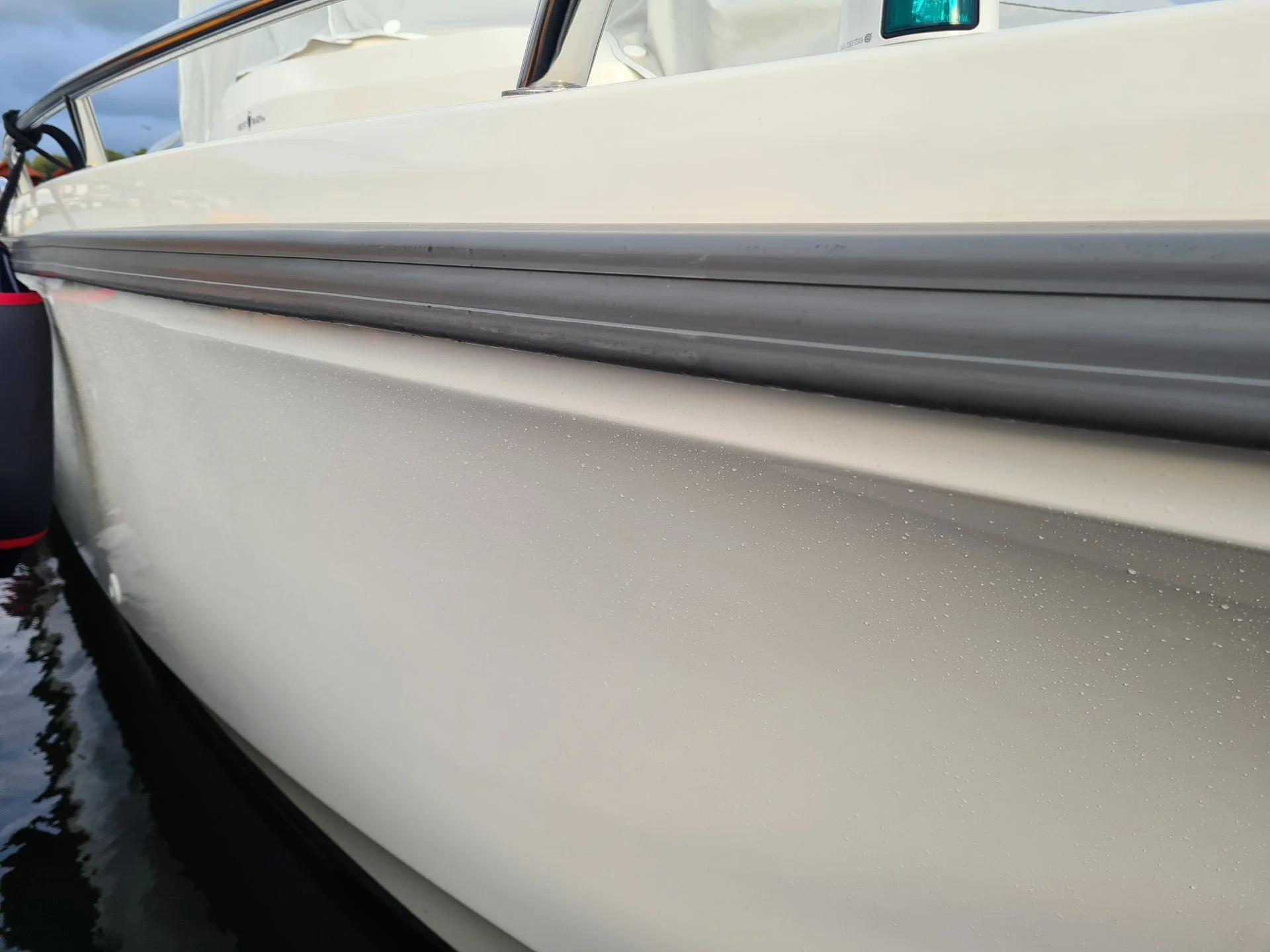
A gallon of gelcoat covers roughly 50 to 60 square feet at the recommended application thickness of about 18 to 20 mils. For a typical 20-foot runabout hull, you might use three to five gallons depending on how many coats are applied and how much overspray or waste occurs during spraying. Buying slightly more than your estimate is always wise — color batches can vary between gallons, and running short mid-job means a visible seam in the finished surface. A professional will calculate material needs precisely after measuring the hull and accounting for the specific application method being used.
Related Guides
Previous: How to Refurbish an Old Boat: A Step-by-Step Restoration Overview | Next: Signs Your Boat Needs Professional Restoration (Not Just a Detail)
Frequently Asked Questions
How long does a professional re-gelcoat job last?
A properly applied and maintained gelcoat finish typically lasts 15 to 25 years before it needs to be redone. Annual waxing and prompt attention to chips or cracks are the biggest factors in reaching the upper end of that range. UV exposure and how the boat is stored also play a significant role.
Can I gelcoat my boat myself to save money?
It is possible, but the margin for error is small. Gelcoat has a short working time once catalyst is added, spraying requires proper equipment and technique, and color matching without professional tools is difficult. Most owners who attempt it end up paying a professional to correct the result, which costs more than hiring a pro from the start.
Is re-gelcoating the same as painting a boat?
No. Gelcoat is a pigmented resin that becomes part of the fiberglass structure and can be sanded and buffed to a high gloss without a topcoat. Marine paint sits on top of the surface and requires a primer and clear coat system. Gelcoat is generally considered more durable and easier to repair in small sections, but it is harder to apply correctly.
What is the difference between gelcoat and Awlgrip or other linear polyurethane paints?
Linear polyurethane paints like Awlgrip produce an extremely hard, high-gloss finish and are often chosen for above-waterline topsides on larger vessels. Gelcoat is the traditional choice for fiberglass hulls and is easier to spot-repair. The right choice depends on the boat type, intended use, and budget.
How do I know if my boat needs re-gelcoating or just a good polish?
If the hull responds to a machine polish and compound — meaning gloss comes back and holds — polishing is the right call. If the surface is chalky, deeply oxidized, covered in spider cracks, or no longer responds to polishing, re-gelcoating is the more cost-effective long-term solution. A marine mechanic can assess this quickly during an inspection.
Does re-gelcoating affect the structural integrity of the hull?
Gelcoat is a cosmetic and protective layer, not a structural one — the fiberglass laminate underneath carries the load. Re-gelcoating does not strengthen or weaken the hull itself. However, the process of inspecting and prepping the surface often reveals structural issues like delamination or blisters that should be addressed at the same time.