
Floating Dock Repair: What Owners Need to Know
Floating dock repair covers everything from replacing rotted decking and cracked floats to fixing failing anchor systems and corroded hardware — and catching problems early almost always costs less than a full rebuild. Most floating docks show clear warning signs before they become dangerous, so a methodical inspection is the best place to start. If your dock is also where you keep your boat, the same mobile marine mechanic who handles your boat repair can often assess dock damage on the same visit. Learn more about Boat Repair.
How Floating Docks Fail and Why It Matters
Floating docks sit at the waterline year-round, which means they take constant punishment from UV exposure, wave action, tidal fluctuation, and biological growth. The float system underneath — whether foam billets, plastic pontoons, or sealed drums — degrades over time and loses buoyancy, causing one side of the dock to ride lower than the other. Decking materials, even pressure-treated lumber, eventually soften, splinter, or pull away from the frame as fasteners corrode. Ignoring these issues does not just create a tripping hazard; a dock that lists or shifts unpredictably can damage a moored boat's hull, cleats, and fenders every time conditions change.
The Most Common Floating Dock Repairs
Decking replacement is the repair most owners encounter first. Individual boards can be swapped out if the underlying frame is still sound, but widespread softness usually means the frame itself needs attention before new decking goes down. Composite and PVC decking have largely replaced treated lumber in new builds because they resist rot and splinters, and they are worth considering when you are already pulling old boards.
Float replacement or supplementation comes next in frequency. Foam billets absorb water over years of use and lose their lift. Plastic pontoon floats can crack from impact or freeze-thaw cycles. In many cases a mechanic can add supplemental float sections to restore freeboard without replacing the entire float system. Anchor line and cable repairs round out the most common work — frayed lines, corroded chain, and dragging anchors all allow the dock to wander, which stresses every connection point on the structure.
- Decking board replacement or full deck resurfacing
- Frame and stringer repair or sistering
- Foam billet or pontoon float replacement
- Anchor line, chain, and cleat hardware replacement
- Gangway hinge and connection hardware servicing
- Electrical and lighting system repairs on dock pedestals
Signs Your Floating Dock Needs Repair Now
Any one of these conditions warrants a professional inspection before the problem spreads or someone gets hurt.
Visible listing or tilt:
One end or side riding noticeably lower than the other points to float failure or an uneven anchor load. This also puts lateral stress on every cleat and mooring line attached to the dock.
Soft or springy decking:
Boards that flex underfoot have lost structural integrity and can fail suddenly under load. Check the frame beneath before assuming only the surface needs replacement.
Corroded or missing fasteners:
Stainless and galvanized hardware still corrodes in salt and brackish water over time. Missing bolts or screws allow boards and frame members to shift independently, accelerating wear.
Excessive movement at anchor:
A dock that swings or surges more than usual has a compromised anchor system. Constant motion fatigues connections and can grind against a moored hull.
Waterlogged or sunken floats:
Floats that sit at or below the waterline have lost buoyancy and can no longer support safe working loads. This is a safety issue, not just a cosmetic one.
Gangway that no longer levels:
A gangway that sits at a steep angle at normal tide indicates the dock has lost freeboard. Hinges and connection hardware also wear faster when the angle is extreme.
What a Floating Dock Repair Visit Looks Like
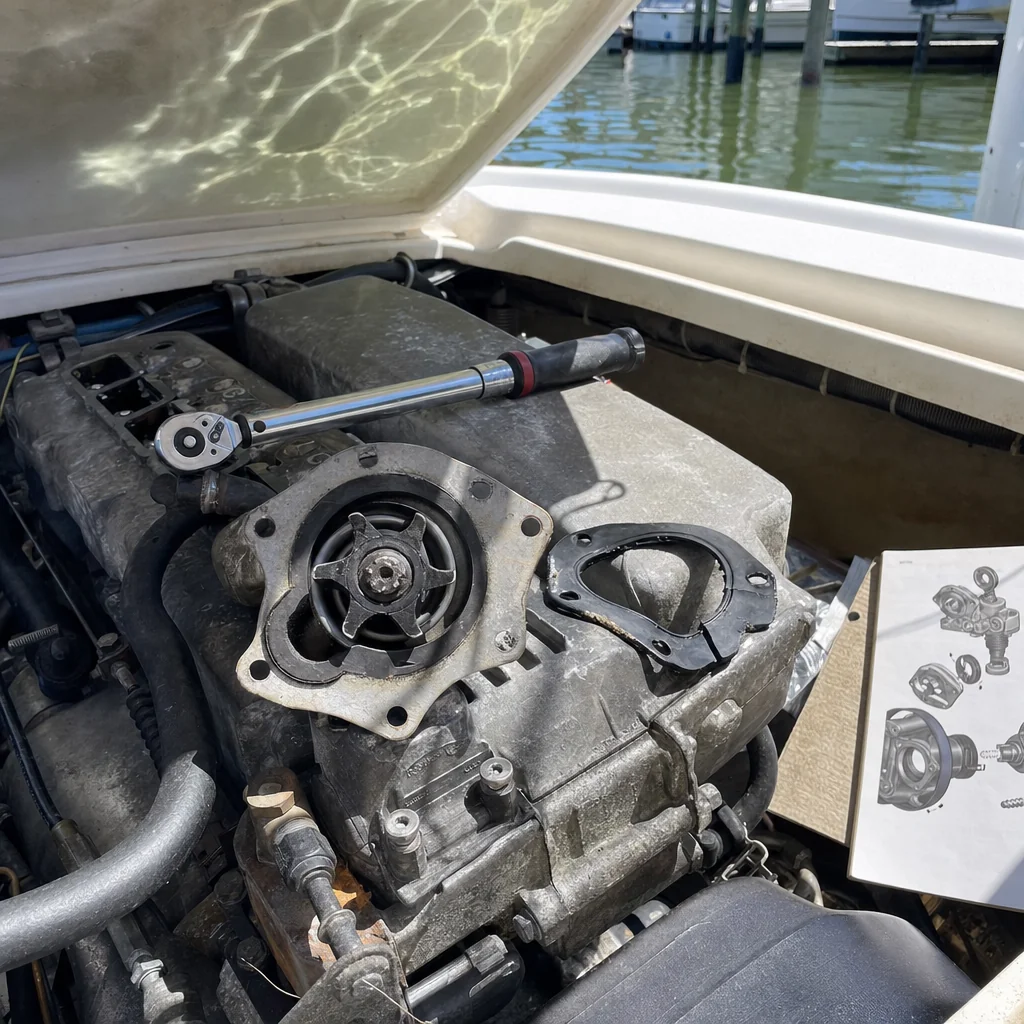
A qualified marine mechanic will start with a full walk-around inspection, checking freeboard, decking condition, frame integrity, float buoyancy, and anchor system tension before quoting any work. Because floating docks are accessible by water, a mobile mechanic can reach docks that are not connected to shore power or road access, which is one reason boat owners often schedule dock work alongside routine boat repair to save a trip charge. Repairs are typically staged — structural and float issues first, then decking, then hardware and electrical — so the dock is safe to use as quickly as possible. Most straightforward repairs like board replacement or anchor line work can be completed in a single visit.
Related Guides
Previous: pontoon carpet replacement | Next: pontoon repair
Frequently Asked Questions
How do I know whether to repair or replace my floating dock?
If the main frame and float system are structurally sound, targeted repairs almost always make more financial sense than a full replacement. A dock with a compromised frame, severely waterlogged floats throughout, and widespread decking rot is usually more economical to replace. A professional inspection gives you the information to make that call with confidence.
Can a floating dock be repaired while boats are still moored to it?
For minor work like replacing individual boards or hardware, boats can often stay in place. For float replacement or significant frame work, the dock needs to be cleared so the mechanic can safely access the underside and the structure can be repositioned if needed. Your mechanic will advise you on what needs to move before work begins.
How long does a typical floating dock repair take?
Simple repairs like replacing a section of decking or swapping out a cleat take a few hours. Float replacement or frame sistering on a larger dock can take a full day or spread across two visits depending on parts availability. Getting an accurate time estimate requires an on-site inspection because hidden damage often changes the scope.
What materials are best for replacing floating dock decking?
Composite and PVC decking outperform pressure-treated lumber in wet environments because they do not rot, splinter, or require periodic sealing. They cost more upfront but typically last significantly longer with less maintenance. Aluminum decking is another option for high-traffic commercial docks where maximum durability is the priority.
How often should a floating dock be professionally inspected?
An annual inspection before the heavy-use season is a reasonable baseline for most recreational docks. Docks in high-traffic areas, exposed anchorages, or regions with significant freeze-thaw cycles benefit from a mid-season check as well. Catching small issues once a year is far less expensive than dealing with a failure mid-season.
Is floating dock repair something a mobile marine mechanic handles, or do I need a dock specialist?
Many mobile marine mechanics are experienced with floating dock repair, particularly the structural, hardware, and float components that overlap with their regular boat work. For large commercial dock systems or complex electrical pedestals, a specialist may be needed, but most residential floating dock repairs fall well within a marine mechanic's scope. Scheduling dock work alongside your boat repair is often the most efficient and cost-effective approach.